
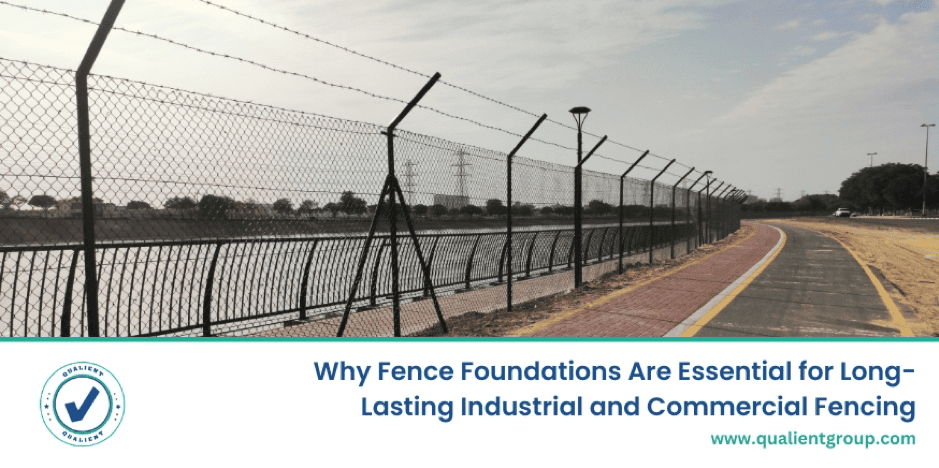
Industrial and commercial fencing serves a much greater purpose than simply defining property boundaries. Across the UAE, businesses depend on secure fencing to protect assets, safeguard employees, control site access, and maintain smooth day-to-day operations.
From logistics parks and warehouses to manufacturing facilities, utilities, construction sites, and commercial developments, the long-term performance of any fence begins below ground with properly engineered Fence Foundations.
While fence panels, gates, and security features often receive the most attention, the foundation is what provides the structural strength needed to withstand wind loads, heavy operational use, challenging soil conditions, and the UAE’s harsh climate.
Without adequate ground preparation and engineered support, even high-quality fencing systems can suffer from leaning posts, misaligned gates, structural movement, and costly repairs.
Understanding the importance of well-designed foundations helps businesses make informed investment decisions that improve durability, reduce maintenance, enhance security, and maximise the lifespan of their industrial and commercial fencing infrastructure.
Why Fence Foundations Matter More Than the Fence Itself
Every fence transfers loads directly into the ground.
Wind pressure, vehicle impact, gate movement, thermal expansion, vibration from nearby traffic, and everyday operational use all place continuous stress on fence posts. The foundation is responsible for safely distributing these forces into the surrounding soil.
Without proper foundations, businesses commonly experience:
- Leaning fence posts
- Misaligned gates
- Loose fencing panels
- Cracking around posts
- Reduced security performance
- Frequent maintenance requirements
- Premature replacement costs
For industrial environments, these issues extend beyond appearance. A compromised fence can create safety hazards, reduce site security, interrupt operations, and increase long-term expenditure.
The Role of Proper Ground Engineering
Every commercial site has unique ground conditions.
Across the UAE, soil characteristics vary considerably depending on location. Contractors may encounter:
- Sandy desert soils
- Reclaimed land
- Coastal environments
- Compacted industrial sites
- Rocky terrain
- Mixed soil conditions
- Areas with underground utilities
These variations directly influence the type and depth of Concrete Footings for Fences required to provide long-term structural stability.
Professional site assessment helps determine:
- Soil bearing capacity
- Ground movement risks
- Drainage characteristics
- Water table conditions
- Underground obstructions
- Existing infrastructure conflicts
Ignoring these factors often leads to structural movement over time, especially for large-scale industrial fencing.
Fence Foundations Support Long-Term Structural Stability
Industrial fences remain under constant stress throughout their service life.
Unlike residential fencing, commercial installations often support:
- Security mesh systems
- Palisade fencing
- Chain link fencing
- Anti-climb fencing
- High-security perimeter barriers
- Automated gates
- Surveillance infrastructure
- Access control systems
These systems create additional weight and wind resistance that require stable foundations capable of maintaining alignment over many years.
Strong foundations minimise:
- Fence movement
- Settlement
- Structural distortion
- Gate sagging
- Panel misalignment
This stability allows the complete fencing system to continue operating as intended while reducing maintenance requirements.
Wind Loads Are a Major Consideration in the UAE
The UAE experiences periods of strong winds, sandstorms, and open-site exposure.
Industrial facilities located in:
- Free zones
- Ports
- Desert developments
- Infrastructure corridors
- Logistics parks
- Large industrial estates
are particularly exposed to wind pressure.
Wind does not simply push against fencing panels.
It creates continuous lateral loads that travel through every fence post into the ground.
Proper Fence Post Installation ensures these forces are transferred safely without causing the posts to loosen or lean over time.
Engineered foundations are particularly important for:
- Tall fencing
- Security fencing
- Privacy fencing
- Temporary construction barriers
- Mesh security systems
The larger the exposed surface area, the greater the structural demand placed on the foundation.
Poor Foundations Increase Lifetime Costs
Businesses often compare fencing suppliers based solely on initial project cost.
However, the lowest installation price rarely reflects the total lifecycle cost.
Inadequate foundations may lead to:
- Frequent repairs
- Fence realignment
- Concrete replacement
- Post replacement
- Gate adjustment
- Operational downtime
- Additional labour expenses
Over several years, these repair costs often exceed the savings achieved through cheaper installation methods.
A properly engineered foundation represents a long-term investment in asset protection.
Concrete Footings Create Long-Term Strength
One of the most important structural components of commercial fencing is the concrete footing surrounding each fence post.
Properly designed Concrete Footings for Fences anchor the posts securely while distributing structural loads evenly into the surrounding ground.
Several factors influence footing design:
- Fence height
- Post size
- Fence type
- Soil conditions
- Wind loading
- Gate locations
- Security requirements
Professional contractors calculate these requirements rather than using standard dimensions for every project.
Correct footing design helps prevent:
- Uplift
- Rotation
- Settlement
- Structural cracking
- Long-term instability
This becomes particularly important on large industrial sites where hundreds or even thousands of metres of fencing are installed.
Industrial Gates Require Additional Foundation Support
Industrial gates are subjected to far greater structural demands than standard fence sections due to their constant movement and operational loads.
Properly engineered foundations provide the stability needed to ensure reliable performance, minimise maintenance, and support safe access across industrial and commercial facilities.
Key Loads on Industrial Gates
Industrial gate foundations must withstand:
- Dynamic opening and closing movements
- Repeated daily operational loading
- Vehicle impact forces
- Automation equipment and motor weight
- Continuous mechanical vibration
Why Strong Foundations Matter
Insufficient foundation support can lead to:
- Gates dragging during operation
- Alignment and tracking issues
- Automatic gate malfunctions
- Increased motor and hardware wear
- Restricted or difficult vehicle access
Well-designed gate foundations help maintain smooth operation, structural stability, and long-term reliability throughout the entire lifespan of the gate system.
Proper Fence Post Installation Improves Overall Fence Performance
The quality of Fence Post Installation directly affects the performance of the entire fencing structure.
Professional installation involves much more than placing a post into concrete.
The process typically includes:
- Accurate site surveying
- Correct spacing between posts
- Vertical alignment
- Proper excavation depth
- Soil preparation
- Reinforcement where required
- Controlled concrete placement
- Appropriate curing time
Each stage contributes to long-term structural reliability.
Even small alignment errors during installation can become significant over long fence runs, affecting both appearance and functionality.
Foundations Protect High-Security Perimeter Systems
High-security facilities across the UAE depend on strong foundations to support fencing systems that protect critical infrastructure. As additional security features increase structural loads, engineered foundations help maintain stability, alignment, and long-term performance.
Facilities That Require High-Security Fencing
These include:
- Data centres
- Logistics parks
- Manufacturing plants
- Energy infrastructure
- Government facilities
- Airports
- Utility compounds
- Distribution centres
Security Features That Add Structural Load
Modern Perimeter Fencing Systems may incorporate:
- Anti-climb mesh
- Razor wire support
- Security cameras
- Motion detection equipment
- Access control systems
- Vehicle barriers
Properly designed foundations ensure these integrated security components remain securely supported, reducing structural movement and helping the entire perimeter protection system perform reliably throughout its operational lifespan.
Site Conditions Influence Foundation Design
No two industrial sites are identical.
Professional contractors evaluate multiple environmental and operational factors before beginning construction.
These include:
Soil Type
Different soil conditions provide varying levels of structural support.
Loose sandy soils require different engineering approaches compared to compacted industrial ground.
Groundwater
Areas with elevated groundwater levels may require modified excavation and drainage methods.
Underground Services
Electricity, telecommunications, water, sewerage, and gas services must be identified before excavation begins.
Site Access
Heavy equipment access affects installation methods, particularly on active industrial sites.
Future Expansion
Businesses planning future facility growth may require foundation designs that accommodate future fencing extensions.
Proper planning avoids unnecessary reconstruction later.
Compliance Matters for Commercial Projects
Commercial and industrial developments across the UAE typically require fencing installations that meet project specifications, engineering requirements, and applicable safety standards.
Working with experienced contractors helps ensure compliance with:
- Project engineering drawings
- Local authority requirements
- Developer specifications
- Industrial safety standards
- Infrastructure project requirements
- Quality assurance procedures
Proper documentation, material selection, and installation methods contribute to successful project delivery while reducing the likelihood of future defects.
Concrete Footings Help Resist Ground Movement
Ground conditions can change over time, even in stable environments, making properly engineered foundations essential for maintaining fence stability. High-quality Concrete Footings for Fences distribute structural loads effectively, helping industrial and commercial fencing remain aligned despite gradual ground movement.
Common Causes of Ground Movement
Factors that may affect fence stability include:
- Natural soil settlement
- Construction vibration
- Heavy equipment and vehicle traffic
- Underground utility installation or repairs
- Nearby excavation activities
- Water infiltration after rainfall
Why Concrete Footings Matter
Properly designed concrete footings minimise movement, reduce the risk of leaning or misaligned fence posts, and maintain structural integrity over long boundary lines.
This ensures reliable performance, lower maintenance requirements, and long-lasting support for industrial and commercial fencing systems across the UAE.
Long Fence Runs Require Consistent Engineering
Large industrial projects often involve kilometres of fencing.
Maintaining structural consistency over long distances requires:
- Uniform excavation depths
- Consistent post spacing
- Accurate surveying
- Quality concrete placement
- Reliable material specifications
- Continuous quality inspections
Consistency ensures the fence performs uniformly across the entire site rather than developing isolated weak points.
This level of precision becomes increasingly important for critical infrastructure and industrial developments.
Environmental Exposure Accelerates Structural Wear
Industrial fencing remains exposed to harsh environmental conditions every day.
Across the UAE, common environmental challenges include:
- High temperatures
- UV exposure
- Wind-driven sand
- Coastal humidity
- Salt-laden air
- Occasional heavy rainfall
While fencing materials are selected for corrosion resistance, the foundation system must also withstand these conditions without deterioration.
Proper drainage, suitable concrete mixes, and careful construction practices all contribute to long-term durability.
Proper Drainage Extends Foundation Life
Water management is often overlooked during fencing projects.
Even in arid climates, sudden rainfall events can create temporary pooling around fence posts.
Poor drainage may contribute to:
- Soil erosion
- Foundation exposure
- Concrete deterioration
- Uneven settlement
Professional installation includes consideration of site grading and drainage to help maintain foundation integrity over time.
Perimeter Fencing Systems Depend on Foundation Integrity
Every component within modern Perimeter Fencing Systems relies on stable, properly installed fence posts to deliver reliable security and long-term performance. Strong foundations help keep the entire fencing structure aligned and fully operational.
Components Supported by Stable Foundations
- Mesh panels
- Security toppings
- CCTV brackets
- Sensor systems
- Lighting infrastructure
- Automated gates
- Access control equipment
Why Foundation Integrity Matters
If foundations shift or settle, attached security components can become misaligned, reducing their effectiveness. Maintaining stable foundations protects the performance, reliability, and lifespan of the entire perimeter security system, helping businesses safeguard their infrastructure and investment.
Quality Installation Supports Business Continuity
Industrial businesses cannot afford unexpected infrastructure failures.
Fence instability may lead to:
- Restricted site access
- Security vulnerabilities
- Temporary operational interruptions
- Additional contractor visits
- Increased maintenance scheduling
Investing in proper planning, engineering, and construction minimises disruption throughout the operational life of the facility.
Reliable fencing becomes part of the site’s long-term infrastructure rather than an ongoing maintenance concern.
Choosing the Right Contractor Makes the Difference
The success of any industrial or commercial fencing project depends on expert design, quality materials, engineered foundations, and professional installation.
Experienced contractors provide value through:
- Detailed site assessment
- Engineering expertise
- Appropriate foundation design
- Skilled installation teams
- Quality control procedures
- Compliance with project specifications
- Professional project management
These capabilities reduce installation risks while improving long-term performance.
Businesses should evaluate contractors based on technical experience, project capability, and proven delivery of industrial fencing projects rather than price alone.
Why Proper Foundations Improve Return on Investment
Commercial fencing represents a significant capital investment.
Protecting that investment starts below ground.
Strong foundations contribute to:
- Reduced maintenance costs
- Longer service life
- Improved structural stability
- Better gate performance
- Enhanced security reliability
- Lower lifecycle expenditure
- Reduced operational disruptions
Over time, these benefits deliver greater value than focusing solely on reducing initial installation costs.
Build Stronger Fencing with the Right Foundation
Industrial and commercial fencing is only as reliable as the ground supporting it. While fence panels, gates, and security features often receive the most attention, properly engineered Fence Foundations are the key to long-term stability, safety, and performance.
From resisting wind loads and supporting automated gates to maintaining alignment across large industrial sites, well-designed foundations ensure dependable fencing for years to come.
Combined with professional Fence Post Installation, engineered Concrete Footings for Fences, and durable Perimeter Fencing Systems, businesses can reduce maintenance costs, improve security, and maximise the lifespan of their fencing investment.
Contact Qualient Group today for expert industrial and commercial fencing solutions across the UAE, built for long-term strength, security, and reliability.